
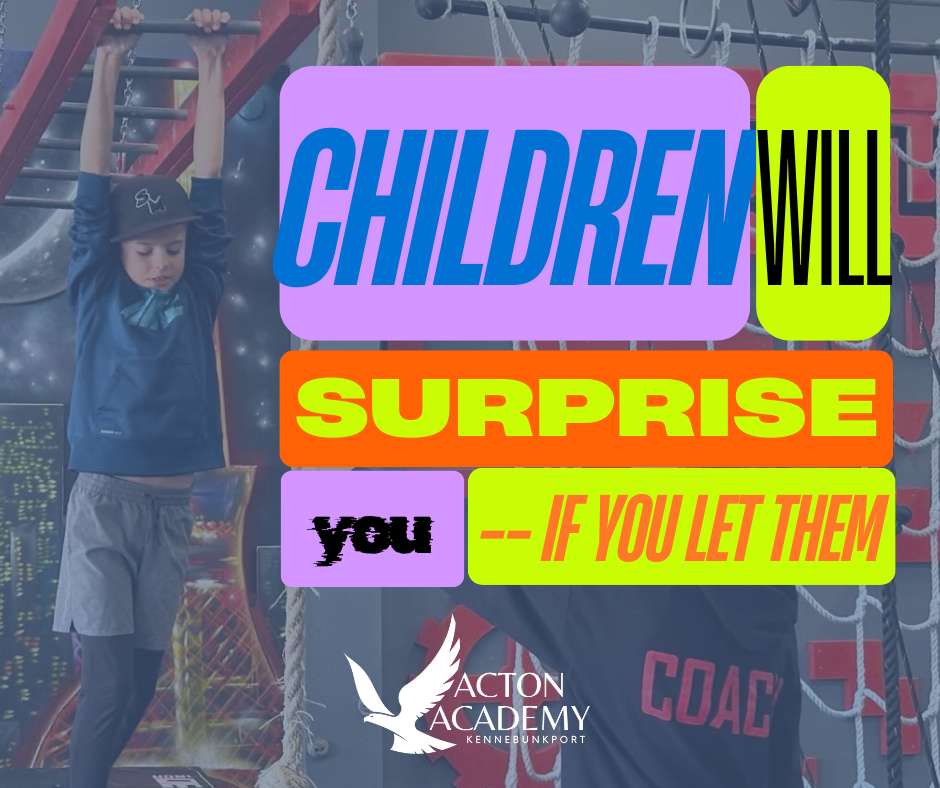
What if the world has been underestimating children all along?
Not in theory—but in practice. Every day, in schools, homes, and programs designed to help them “succeed,” children are too often managed instead of trusted, instructed instead of empowered. But what if the very structures adults create to support young people are the very things holding them back?
At Acton Academy, an unconventional model of education spreading across the globe, the belief is simple: when children are given real responsibility, they rise to meet it—and often far exceed expectations.
Whether it’s six-year-olds leading group discussions or middle schoolers pitching local businesses for internships, the outcome is consistently the same: young people prove capable of far more than the traditional system assumes. The Acton model doesn’t rely on rewards, punishments, or lectures. It’s built on freedom, structure, accountability, and trust.
And when those elements are in place, children don’t just learn—they lead.
The System Assumes Children Need Control
The conventional education model treats children as passive recipients of information. Students are expected to sit quietly, follow directions, and regurgitate facts. The adult is the authority. The child complies.
While the intention may be to prepare students for the “real world,” the unintended lesson is often that success means obedience—and that learning is something done to them, not by them.
This system isn’t broken because teachers don’t care. On the contrary, many teachers are heroes doing their best inside rigid structures. The problem is the system itself. One that prioritizes compliance over curiosity, test scores over transformation.
At Acton Academy, the assumption flips: children are capable of much more, when given the chance.
A Different Assumption: Kids Can Lead Their Own Learning
Step into an Acton studio, and the difference is immediately apparent. There are no traditional teachers—only learning “guides.” No bells. No rows of desks. No standard lectures.
Instead, students—called “learners”—collaborate in mixed-age groups. They set personal goals, hold each other accountable through peer reviews, and take on real-world challenges. They negotiate studio contracts, design group rules, and give public exhibitions of their learning. There are no grades, but there are real consequences—and real stakes.
The result? Learners don’t just memorize; they take ownership. They don’t just follow rules; they build cultures.
Again and again, Acton learners demonstrate that freedom paired with responsibility creates a launchpad for growth.
Responsibility is a Muscle
Children aren’t automatically ready for adult-level accountability. But they can handle real stakes, scaled appropriately to their development. And when responsibility is practiced regularly, it becomes a muscle.
In Acton studios, learners give and receive 360-degree peer feedback, review each other’s project work, and lead Socratic discussions about ethics, history, and culture. They experience natural consequences for missed deadlines. They help set studio norms and revise them when those norms fall short.
None of this is theoretical. These are real decisions, made by real children—who learn, over time, that their choices matter.
And when children understand that their actions impact others, they don’t become reckless. They become more thoughtful, more self-aware, and more engaged.
So Why Isn’t This the Norm?
Because trusting children is difficult.
It’s easier to manage than mentor. Easier to deliver consequences than let learners feel the impact of their choices. Easier to assume “they’re just not ready” than to give them a real chance.
But easier isn’t the same as better.
If society wants young people to become thoughtful leaders, resilient workers, and courageous innovators, they must be invited to practice those things now—not after college.
The Better Question
Perhaps the right question isn’t “What are children capable of?” but:
“Are adults willing to let them show us?”
Because the truth is: children will surprise the world—if the world lets them.
They will surprise us with their courage, their creativity, and their ability to rise to meet real challenges.
At Acton, this isn’t a hopeful theory—it’s a daily reality.
The only question left is: what might change if more children were trusted to lead?
