
Have you ever paused to wonder why kindergarten feels more competitive than college admissions used to be? It sounds exaggerated — until you see parents prepping toddlers for interviews, three-year-olds in mini “academic readiness” classes, and educational pressure that begins far too early.
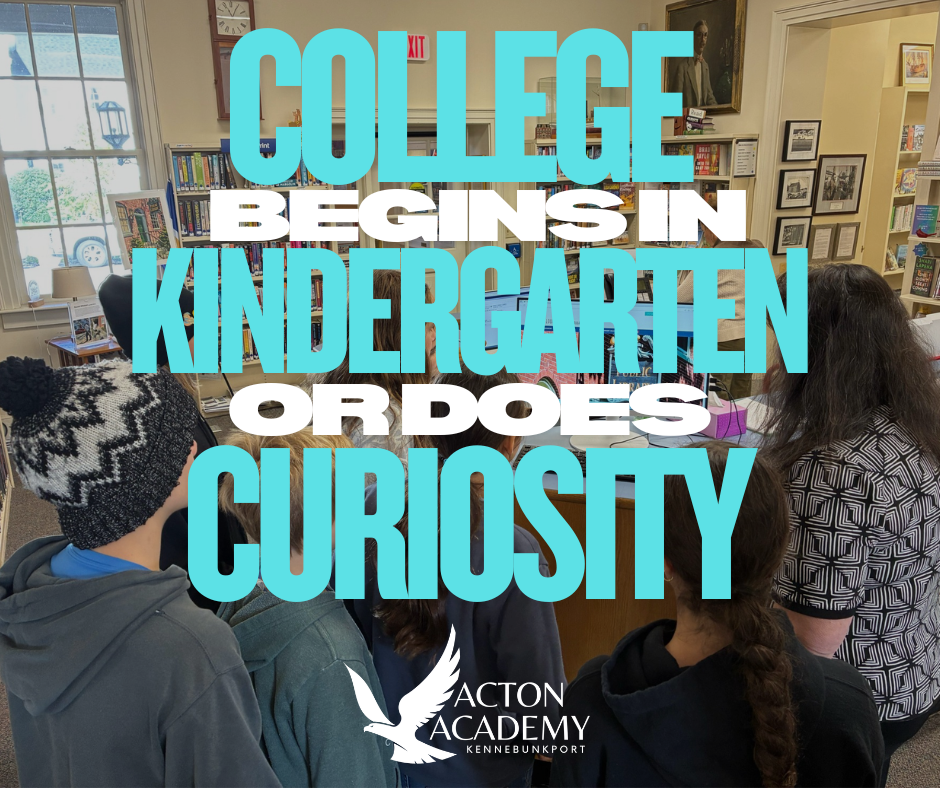
This trend reflects a deeper assumption: that education’s purpose is to shepherd our children along a straight path toward higher education — as quickly and as early as possible. The idea has become so widespread that most families don’t even question it anymore. And yet, as visionary educator Ken Robinson once humorously pointed out, “College begins in kindergarten.” — except it doesn’t. And that’s exactly the problem.
Why We Started School So Early
The assumption takes root in a belief that more structured learning at a younger age means better outcomes later in life — especially in college and career success. Children are placed in programs that promise early literacy, advanced math, and “school-readiness” skills as if those measurable milestones determine lifelong fulfillment and achievement.
But what are they ready for?
Are they ready to march in line? To sit still and raise hands? To perform on someone else’s timeline?
Or are they ready to play, explore, question, and imagine?
A Three-Year-Old Is Not a Mini-Six-Year-Old
Robinson — with his trademark wit — reminds us that a three-year-old is not “half a six-year-old.” They are three. They think differently. They learn differently. They are in the moment — not ticking boxes on an adult-crafted checklist.
And yet we pressure them to conform to an industrial model of education: linear, uniform, time-based, and standard. Kindergarten becomes less about wonder and more about testing.
This model assumes that early academic achievement — especially when quantified — is the best pathway to future success. But here’s the truth: It isn’t.
Curiosity Is the Real Foundation
If we step back and ask what skills serve our children best in life, the answer isn’t far off:
The ability to explore
The courage to ask questions
The joy of discovery
Confidence in the face of challenge
The resilience to try again
These traits are not taught through worksheets. They are cultivated through meaningful engagement — the kind that flourishes when children are free to follow their interests, test ideas, and make real progress at their own pace.
At Acton Academy Kennebunkport, we’ve seen this firsthand. Children aren’t learning to learn because they’re told to — they learn because they want to. They pursue projects that resonate with them, tackle challenges that matter, and take ownership of their own education.
The Problem with Pushing Too Early
When we push early, there are unintended consequences:
Children can become disengaged from learning they once enjoyed.
Interests get crowded out by agendas that aren’t theirs.
Curiosity is replaced by compliance.
Creativity is narrowed by standardization.
Instead of nurturing individual passion and unique potential, early academic acceleration can prematurely channel children into a narrow definition of success. And for many, that channel feels more like a conveyor belt.
Education Should Be Organic, Not Industrial
One of the most powerful shifts we can make — as parents, educators, and community members — is to rethink the purpose of education.
Instead of seeing school as a production line whose goal is college admission, we can see it as a process of cultivating learners. Like a garden:
Each child has different soil, different seeds, and different conditions.
Growth is not linear.
Blooming happens at different times — and that’s okay.
Some children will dive into mathematics early. Others will explore creative writing first. Some may build robots at age 9 and pursue environmental science at 13. The point isn’t when they learn — it’s that they learn with passion, ownership, and curiosity.
Let Curiosity Lead the Way
Rather than racing toward college, what if we instead helped our children:
Develop inner motivation?
Pursue mastery for its own sake?
Learn to think critically?
Apply knowledge in real, meaningful ways?
These are the outcomes that matter in life — far beyond a test score or college label.
At Acton Academy Kennebunkport, we don’t hurry children through “levels” on someone else’s timeline. We support them in mastering concepts deeply, engaging in real projects that matter, and learning to learn — not just memorize.
We believe that education isn’t pre-college. Education is pre-life.
Curiosity Doesn’t Need to Be Rushed — It Needs to Be Freed.
If you’d like to learn more about how children flourish when curiosity leads the way — and how your child’s education can be personalized, meaningful, and empowering — we invite you to explore our free Info Kit here.
Let’s rethink education together — not as a race to college, but as a journey toward lifelong discovery.
